Breaking News: Local & Latest
- 3.9
- Rating
- 100.00K
- Installs
- Free
- Price

 Analysis by App-foxy
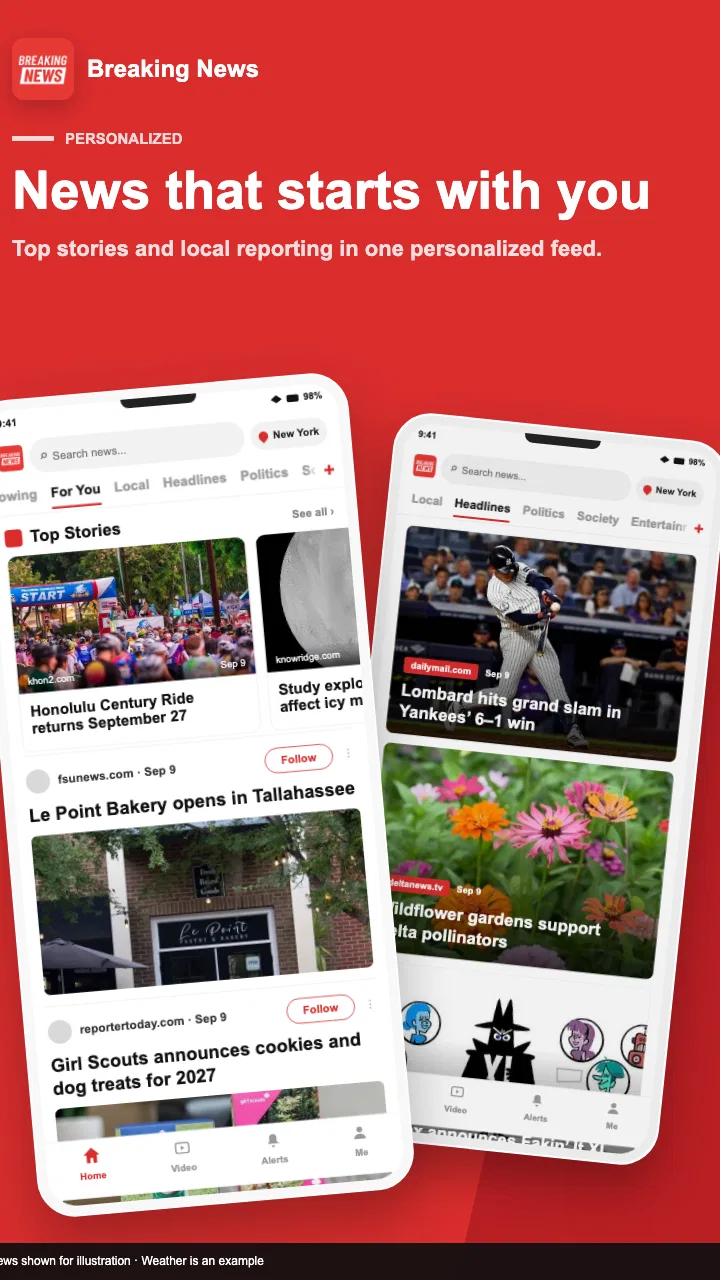
I found Breaking News: Local & Latest most useful as a quick news-checking app rather than a complete replacement for every publication I already read. Its focus is simple: bring personalized, local, and breaking updates into one place so I can see what deserves attention without opening several separate news apps. That focused purpose is also the key to understanding it. It is best when I want a fast overview, not when I want a deep magazine-style reading experience.
After spending time with it, my overall impression is cautiously positive. The app is free, aimed at everyone, and developed by LiveTech Limited. It has reached more than 50 thousand installs and holds a 3.9 average from 195 ratings, which suggests that people generally find value in it while still encountering some rough edges. I would recommend trying it if your daily routine involves checking headlines several times, especially for nearby events, but I would not advise treating it as your only source for important information.
What makes the news experience useful
The most convincing part of the app is its combination of speed and relevance. A traditional newspaper app may be excellent for one editorial voice, while a general search engine can leave me sorting through unrelated pages. This app sits between those approaches. It is designed around the practical question I ask during the day: what is happening now, and which of it is likely to matter to me?
You May Also Like

 Blood Strike: 2.5 Anniversary
Blood Strike’s Loadouts Turn Every Drop Into a Tactical Gamble
A close look at Blood Strike’s custom loadouts: how fast access to signature weapons reshapes its battle royale rhythm, rewards preparation, and narrows the gap between fights.

 Pandora - Music & Podcasts
Pandora’s Music Is Easy to Start, but Harder to Recover
Pandora’s strength is its low-effort path from a seed to a station. Its weak spot is how much confidence it asks you to place in connection, setup, and quiet recovery.

 8 Ball Pool
 Is Built on Rivalries, Rematches, and Routine
A close look at the rivalries, rematches, shared routines, and unanswered safety questions that turn a quick pool match into a persistent mobile community.

 Samsung Music
’s Quiet Strength Is Playing What You Already Own
Its reach comes less from spectacle than from dependable access to a personal library. That simplicity is both the app’s strongest retention engine and its ceiling.

 AccuWeather: Weather Radar
AccuWeather Review: A Quick, Clear Forecast for Everyday Decisions
For everyday plans, the best forecast is the one you can understand quickly. AccuWeather makes rain timing, radar, and local conditions easy to act on, with a few trade-offs.

 Hill Climb Racing
Why Hill Climb Racing Still Turns Crashes Into One More Run
A tiny car, a bumpy hill and one more upgrade: Hill Climb Racing keeps resurfacing because its simple chaos makes every near-miss feel personal.
More From Our News Desk
View All News


That makes it convenient during short gaps in a routine. I can imagine opening it while waiting for a train, before starting work, or during a lunch break and getting a quick sense of local developments and wider breaking stories. The value is not only in finding a headline. It is in reducing the effort required to decide where to look first.
The personalization angle is particularly useful when it is handled with restraint. News becomes easier to follow when the app reflects my interests instead of presenting an endless, undifferentiated stream. At the same time, personalization can become a weakness if it narrows my view too much. I therefore prefer using the app as a first pass: I scan the topics that appear relevant, then open the stories that genuinely deserve more time.
Local coverage gives the experience a practical edge. National headlines are easy to find in many places, but nearby road problems, community developments, weather-related disruption, and regional events are often more immediately useful. For someone who wants a broad picture that still feels connected to daily life, that local emphasis can make the app more valuable than a standard national news feed.
Another strength is the low barrier to entry. The app is free, carries an Everyone content rating, and supports devices running Android 7.0 or later. That makes it accessible to people using older Android phones rather than limiting the experience to recent hardware. I also appreciate that the current release is version 1.6.7, because it shows the product is being maintained as an active app rather than left as a static headline reader.
In practical use, I would build a small routine around it instead of leaving it open constantly. A morning check can reveal the main developments of the day, while a second look later can show whether a developing story has changed. This approach avoids turning every alert into an interruption and makes the app serve a clear purpose. The best news tools are often the ones that fit naturally into a habit, and this one has the ingredients for that kind of use.
A realistic everyday workflow
Consider a commuter who needs to know whether the morning will be ordinary or disrupted. Before leaving home, that person can use the local side of the feed to look for nearby developments, then scan breaking coverage for larger events that may affect travel or work. If a headline looks important, the next sensible step is to read the full report and compare it with a trusted publication before making a decision.
Later in the day, the same reader can return for a shorter update rather than starting the entire search again. This is where a personalized news app can be more efficient than manually visiting several homepages. The workflow is not about reading everything. It is about using the app to identify what deserves attention and what can safely wait.
A less obvious benefit is that this method helps separate discovery from verification. The app can be the place where I notice a story, while an established source remains the place where I confirm details, context, and consequences. That division of labor is sensible for breaking news, where early reports can change quickly. Use it as a smart starting point, not as permission to skip source checking.
There is also a useful way to handle a headline that seems relevant but not urgent. I would make a mental note of the subject, then return only if later coverage shows it has a practical effect on my plans. That keeps a busy feed from dictating the shape of the day. For local stories in particular, the distinction between something happening nearby and something that actually affects my route, household, or work matters. A quick check is valuable, but it should not turn every neighborhood development into an immediate task.
Where it fits beside familiar alternatives
Compared with a single newspaper application, Breaking News: Local & Latest appears more flexible in its purpose. A newspaper app usually gives me a consistent editorial identity, deeper analysis, and a recognizable style. This app is more useful when I want a wider sweep across local and current developments without committing to one publication’s priorities.
Compared with a social media feed, it should be calmer and more intentional for news discovery. Social platforms may surface stories quickly, but they also mix reporting with commentary, personal posts, repetition, and speculation. A dedicated news app is a better place to begin when I want headlines organized around news rather than around the reactions of other users.
Compared with a search engine, the advantage is convenience. Searching manually is powerful when I already know the exact subject, city, or event I want. It is less efficient when I simply want an overview. This app is better for that open-ended check-in, while search remains the stronger option for researching a specific question or finding an older article.
There is also a trade-off against specialist news services. A financial reader, sports service, or technology publication can offer much greater depth in one area. This app makes more sense for a general reader who wants breadth. If my entire day depends on detailed market reporting or specialist analysis, I would pair it with a dedicated source rather than expect one broad app to cover every need.
Choosing between these options is less about finding one perfect reader and more about deciding what job each one should do. A newspaper app is my pick when I want a consistent voice and context; search is better for a question I can already name; social media may be useful for seeing public reactions, but I would not use it as my main verification path. This app earns a place when the need is less defined: I want a quick scan, especially with a local angle, before deciding where to spend my reading time.
The weakness I noticed in the concept
The same breadth that makes the app convenient can make the reading experience feel less distinctive than a publication with a strong newsroom identity. When several subjects are brought together, I may get a useful overview, but I may also need to spend more time deciding which story deserves confidence and deeper attention. That is not a flaw unique to this app, but it matters when the app’s main promise is fast access.
Breaking news also creates an unavoidable tension between immediacy and completeness. A headline can be useful before all the details are settled, yet early coverage may lack context or later corrections. I would be uncomfortable relying on a single short update for a serious matter involving safety, money, health, or public decisions. The app is strongest at helping me notice developments; it is weaker as a substitute for careful reading across multiple reliable reports.
Personalization requires similar care. A feed that learns what I tend to read can save time, but it may also encourage a narrow routine. If I repeatedly choose the same subjects, I could miss important stories outside those interests. My practical solution is to keep some room for general headlines and local coverage, even when they are not the topics I normally seek. That small habit makes personalization more useful without letting it become a filter bubble.
Readers who want long-form journalism may also find the experience limited for their needs. The app’s appeal is quick discovery and current awareness, not the feeling of settling in with a weekend feature. I would skip it if my main goal were investigative reporting, extensive opinion columns, or a carefully curated publication archive. In those cases, a newspaper subscription or specialist magazine app would likely be a better match.
There is a small but important trade-off in using any broad feed as a daily filter: it can make a headline feel more complete simply because it is easy to find. I try not to confuse visibility with importance, or repetition with confirmation. If several outlets appear to cover one event, I still look for a report that explains what is known, what remains uncertain, and when the account was updated. That extra pause is worthwhile whenever a developing story might influence a real decision.
Who should install it
I think the best audience is the everyday reader who checks news in short sessions and wants local events alongside broader breaking coverage. It is also a reasonable choice for people who dislike jumping among several apps just to understand the day’s main developments. Since it is free and supports Android 7.0 and above, experimenting with it does not require a new phone or a paid commitment.
It may suit students, commuters, families, and workers who need general awareness without building a complicated reading system. Someone moving to a new area could find the local angle especially helpful while learning what is happening nearby. Likewise, a reader who already follows one favorite publication could use this app as a second window for stories that publication does not emphasize.
I would be more selective for readers with strict editorial requirements. If you need every article to come from one newsroom, prefer detailed attribution at a glance, or want a carefully edited daily edition, a dedicated publication app may feel more dependable. The same applies to anyone who wants specialist coverage rather than a broad mixture of current topics.
One useful way to test whether it belongs in your routine is to give it a defined job for several days. Use it for a morning overview and an evening update, then notice whether it helps you find relevant stories faster than your current method. If you still end up opening multiple sources for every headline, keep it as a discovery tool rather than making it your main reader. That is a more realistic role than expecting it to replace every news habit at once.
For a household, I would treat the local feed as a conversation starter rather than a definitive community bulletin. A parent might spot a nearby development worth discussing, while someone working from home might use a short check before planning errands. In both cases, the app can help identify a topic, but a direct, authoritative source is still the better place to confirm instructions or time-sensitive details. That distinction makes the app useful without asking it to take responsibility for decisions it was not designed to make.
Making the switch without overhauling your routine
Moving from another news app does not have to mean deleting it or rebuilding every habit at once. I would keep the publication I trust for deeper reading and add this app only for the moments when I would otherwise browse several homepages without a clear goal. After a week, the useful question is not whether it replaces everything, but whether it saves effort on those quick checks. If it does, it has earned a complementary role; if it merely adds another stream to keep up with, there is little reason to force the change.
It is also worth deciding in advance what deserves a follow-up. A local item about a planned change may be worth checking again before leaving home, while a general headline with no bearing on the day can remain a passing update. This simple sorting habit makes a broad feed easier to manage and reduces the temptation to keep refreshing just because new stories are available. I find that a news app works best when I control when I consult it, rather than letting the possibility of another headline set my pace.
My final assessment
Breaking News: Local & Latest succeeds because it understands a common need: I want to know what is happening without spending the first part of the day searching. Its blend of personalized, local, and breaking coverage gives it a clear identity, and its free access makes it easy to try. LiveTech Limited has produced an app that is approachable for general Android users, including those on older supported devices.
The 3.9 average rating reflects my own balanced view. There is enough here to make the app worthwhile, but it is not a complete answer to every news-reading need. Its convenience should be balanced with source awareness, especially when a story is developing or has serious consequences. I would also keep a trusted publication nearby for analysis and confirmation.
My recommendation is straightforward: install it if you want a quick, broad news check with local relevance, and use its feed to decide what deserves deeper reading. Skip it if you are looking for one authoritative publication, specialist reporting, or a long-form reading environment. For fast awareness, it is a useful companion; for full understanding, it works best as the first step in a wider news routine.
FAQs for Breaking News: Local & Latest
01What features does Breaking News: Local & Latest offer?
Breaking News: Local & Latest provides real-time news updates from around the world. It offers customizable alerts, allowing users to follow specific topics or regions. The app also includes a user-friendly interface with features such as offline reading, video news clips, and a personalized news feed tailored to your interests.
02Is Breaking News: Local & Latest available for both Android and iOS?
Yes, Breaking News: Local & Latest is available for download on both Android and iOS platforms. You can find the app on the Google Play Store for Android devices and the Apple App Store for iOS devices, ensuring a seamless experience across different smartphones and tablets.
03How does the app ensure the accuracy of its news content?
Breaking News: Local & Latest sources its news from reputable global news agencies and local correspondents. The app employs a team of editors who verify the credibility of news stories before they are published. Additionally, it features fact-checking partnerships to maintain high standards of accuracy and reliability.
04Are there any subscription fees or in-app purchases?
The app is free to download and offers a range of features at no cost. However, it may include optional in-app purchases or subscription plans that provide additional benefits, such as ad-free browsing, exclusive content, or enhanced customization options. Users can choose to upgrade based on their preferences.
05Can I customize my news feed in Breaking News: Local & Latest?
Yes, the app allows users to tailor their news feed according to their interests. You can select preferred topics, regions, or specific news sources to receive more relevant updates. The app's algorithm learns from your preferences over time, providing a more personalized news experience.
Pros
- Customizable news categories.
- Real-time updates and alerts.
- User-friendly interface.
- Offline reading mode available.
- Minimal ad interruptions.
Cons
- Limited regional news coverage.
- Occasional app crashes reported.
- Requires internet for updates.
- No dark mode option.
- Subscription needed for premium features.

Breaking News: Local & Latest
Gallery